Glint
A mobile dating application frontend focused on intuitive navigation, thoughtful interactions, and a polished user experience.
Interested in this project?
Have a question or want to know more about the work behind it?
Ask about this project →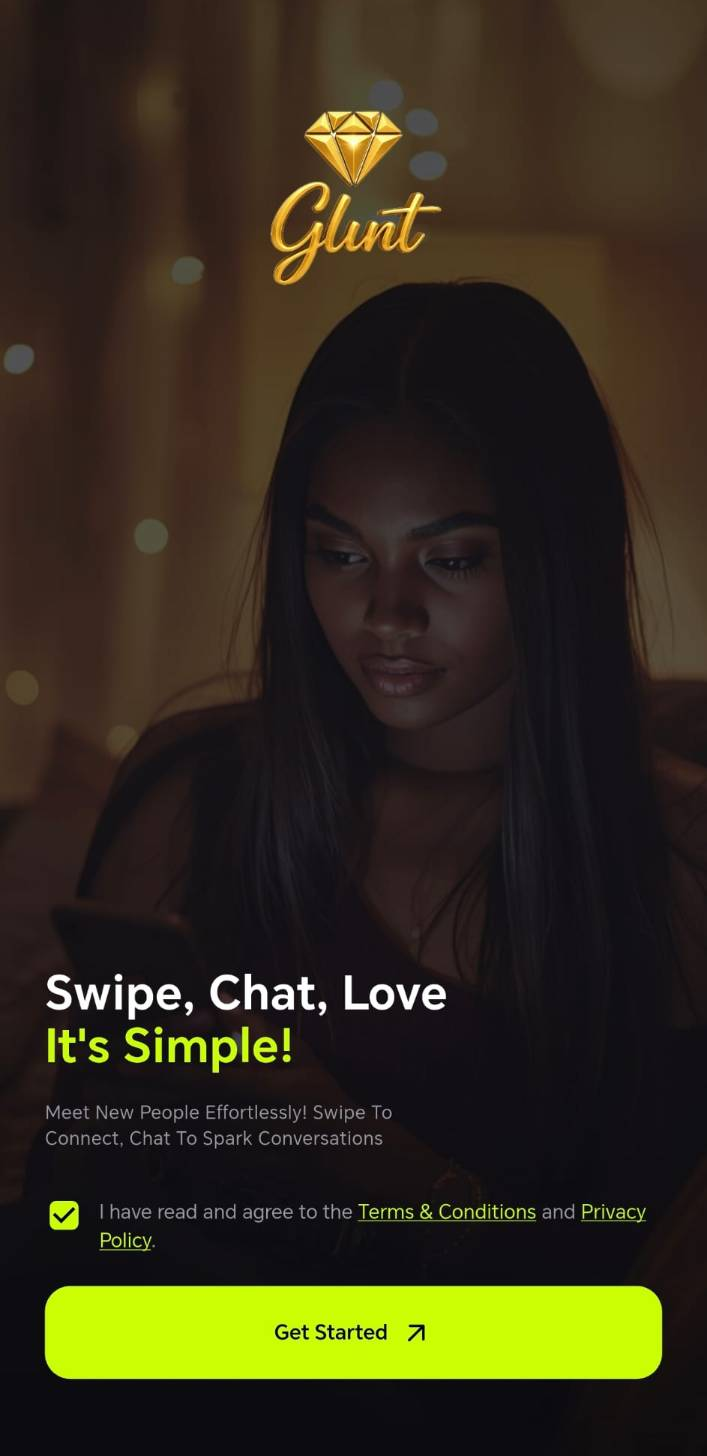
01 — Overview
Digital introductions begin with first impressions. A good interface should help them happen, not get in the way.
Glint is an independent mobile dating application project focused on creating a modern, visually appealing, and intuitive user experience. The concept aimed to make meeting new people feel more natural by combining familiar mobile application features with additional ways for users to interact.
Particular attention was given to interface design, user journeys, and the overall flow of interaction. From profile presentation and navigation to information layout and interactive elements, visual decisions were developed as parts of a cohesive user experience.
One of the ideas explored within Glint was Spark, a concept for short video introductions intended to move beyond viewing a profile towards more direct interaction. Voice introductions were also considered as an additional way for users to express their personality beyond photographs and written descriptions.
The practical outcome was an implemented mobile frontend demonstrating the project's visual identity, interface structure, and approach to user interaction.
Glint represents an example of designing and implementing the user-facing side of a mobile product. Although the project was not released as an operational dating service, its frontend provides a tangible demonstration of mobile interface design and development.
02 — The Challenge
Creating an attractive interface is not enough. Behind the visual design, the user experience must remain clear and natural.
Dating applications present a particular challenge in user experience design. Unlike many purely functional software tools, their interfaces are not only used to complete tasks — they also provide the environment in which one person forms a first impression of another.
Traditional profiles and photographs offer an initial introduction, but they do not always convey the qualities of real conversation. Introducing additional ways to interact therefore requires careful consideration: new features should not complicate navigation or create unnecessary obstacles to making a connection.
One of Glint's central design challenges was to create a cohesive user experience combining visual appeal, a clear application structure, and opportunities for more direct communication. Each screen needed a defined purpose, while transitions between actions had to remain consistent and predictable.
The challenge was not to introduce as many ways to connect as possible, but to make the experience of connecting simple, natural, and enjoyable.
03 — The Result
Not every project reaches commercial launch, but a developed project can still provide valuable practical experience.
The work on Glint resulted in an implemented mobile frontend bringing together a visual concept, user interfaces, and core interaction flows. The project provided an opportunity to explore the practical challenges of organising user experiences, designing consistent navigation, and creating a coherent visual environment for an application centred on human interaction.
Despite the progress made on the user-facing application, the project encountered financial constraints. The lack of necessary funding prevented its continued development towards a full commercial release, and Glint was never launched as an operational dating service.
Nevertheless, the work retained its professional value. Glint became a practical exercise in user experience exploration, mobile interface design, and translating a product concept into a working frontend.
Glint's principal outcome was not a commercially launched product, but the practical experience gained in designing and implementing user interactions.